- Reviewed by
- David Tevzadze
- Fact checked by
- Vin Cooper

- Date
- Views
- 1
- Reading time
- 10 分钟.
What Is Backtesting in Trading?
Key Takeaways:
- Backtesting helps crypto traders evaluate trading strategies using historical market data before risking real capital;
- Manual crypto backtesting is accessible to beginners but requires more time and is prone to human error;
- Automated backtesting allows traders to test strategies faster and more consistently, though it may require technical skills;
- Key performance metrics, including win rate, profit factor, and maximum drawdown, help assess a strategy’s profitability and risk;
- Past performance doesn’t guarantee future results. Backtesting should be combined with forward testing and proper risk management.
What Is Сrypto Backtesting?
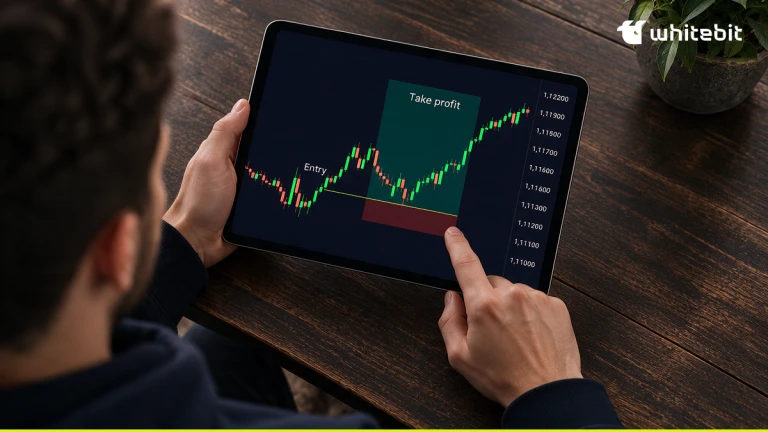
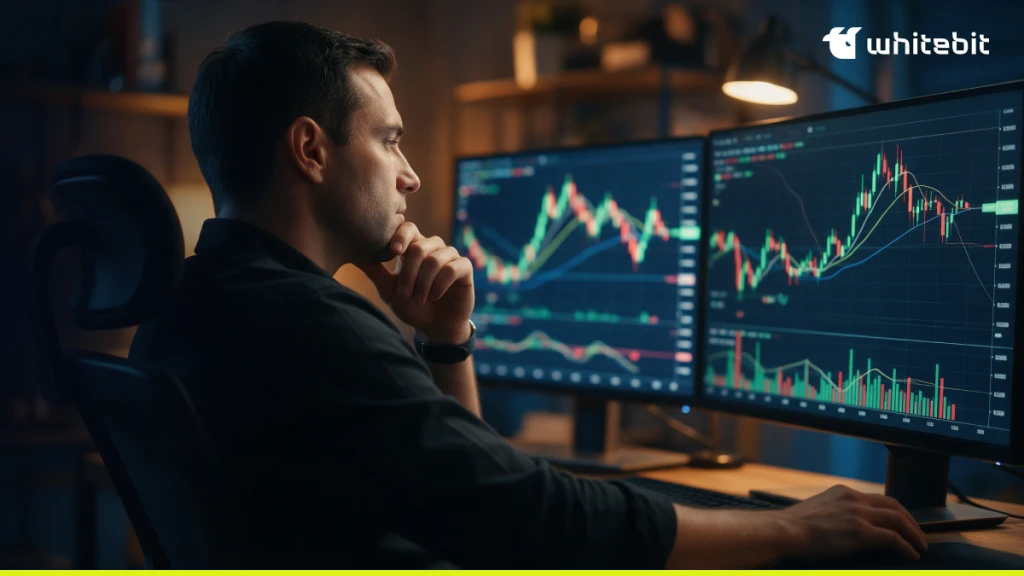
Backtesting is the process of testing a trading strategy against historical market data to assess how it would have performed in the past. By applying predefined entry and exit rules to previous price movements, traders can measure potential returns, identify risks, and evaluate a strategy’s effectiveness before using it in live trading.
The Importance of Backtesting in Crypto Trading
Backtesting allows crypto traders to identify weaknesses in their strategies and make adjustments before committing real capital. It helps them fine-tune entry and exit points, assess risk management rules, and understand how their approach holds up across different market conditions.
Given the volatility of cryptocurrency markets, testing a strategy before executing live trades is particularly important. Although historical results cannot predict future performance, they can help traders set realistic expectations and make more informed decisions.
How to Backtest a Trading Strategy: Step by Step
Backtesting involves defining trading rules, testing them against historical market data, and evaluating the results. Follow these six steps to assess your strategy before using it in live markets.
- Define Your Trading Strategy. Set specific entry and exit rules, including technical indicators, timeframes, stop-loss levels, and take-profit targets.
- Collect Historical Market Crypto Backtesting Data. Obtain reliable price and volume data for your chosen cryptocurrency, covering bullish, bearish, and sideways market conditions.
- Run the Backtest. Apply your rules to historical price data manually or with automated tools. Factor in trading fees, slippage, and other transaction costs to produce more realistic results.
- Analyze the Results. Examine key performance metrics, including win rate, profit factor, maximum drawdown, and risk-adjusted returns. Assess both profitability and the level of risk taken to achieve it.
- Refine and Retest Your Strategy. Address any weaknesses identified during testing and adjust your parameters as needed. Avoid overfitting the strategy to historical data, as this can produce misleading results.
- Validate with Out-of-Sample Data. Evaluate your strategy using data excluded from the optimization process. If performance remains consistent, proceed to paper trading before committing real capital.
Manual vs. Automated Backtesting
Crypto traders can backtesting crypto trading strategies manually or use automated software. The choice depends on the complexity of the strategy, available resources, and the trader’s technical expertise.
Manual Backtesting
Manual backtesting involves reviewing historical price charts, identifying trade setups, and recording hypothetical trades according to predefined rules. Traders typically use charting platforms or spreadsheets such as Excel to track entries and exits, calculate profits and losses, and assess performance.
For beginners, manual testing can be the best way to backtest trading strategies without programming skills. It allows traders to examine price action closely and understand how their approach performs under different market conditions. However, analyzing large datasets can be time-consuming, and the process is vulnerable to human error, inconsistent application of trading rules, and hindsight bias.
Automated Backtesting
Automated backtesting uses software to simulate trades based on historical market data and predefined rules. The system processes trade signals, calculates performance metrics, and generates reports. Some trading platforms have built-in testing features, while others allow users to develop custom algorithms, often in Python.
Automation makes it possible to evaluate thousands of trades across multiple cryptocurrencies and timeframes in considerably less time. It also applies trading rules consistently and simplifies comparisons between strategy variations. However, some tools require programming knowledge, paid subscriptions, or additional configuration. Inaccurate data, coding errors, and overfitting can also distort the results.
Manual vs. Automated Backtesting: Key Differences
The table below compares manual and automated backtesting across key factors, including required skills, time investment, accuracy, and suitability for different trading strategies.
| Criteria | Manual Backtesting | Automated Backtesting |
| Required skills | Basic trading knowledge | Platform proficiency or coding skills |
| Time investment | High | Low per test after initial setup |
| Speed | Slow, especially with large datasets | Fast, even with extensive datasets |
| Reproducibility | Lower, due to human judgment | High, with consistent rules and data |
| Best suited for | Simple, discretionary strategies | Rule-based, systematic strategies |
| Main limitations | Human error, hindsight bias | Technical complexity, overfitting |
Pros and Cons of Backtesting
Backtesting allows traders to evaluate their strategies before committing real capital, although its results come with certain limitations.
Pros of Backtesting:
- Strategy Evaluation: Assess how a trading approach would have performed under past market conditions.
- Risk Assessment: Identify potential drawdowns and estimate exposure to losses.
- Strategy Optimization: Adjust entry and exit rules based on test results.
- Cost Efficiency: Experiment with different approaches without putting real funds at risk.
- Informed Decision-Making: Use historical performance data to guide trading decisions rather than relying on assumptions.
Cons of Backtesting:
- Limited Predictive Value: Historical performance cannot reliably predict future returns.
- Overfitting: Excessive optimization can produce strategies that perform poorly on new data.
- Data Quality Issues: Missing or inaccurate price data can compromise test results.
- Execution Limitations: Slippage, trading fees, and liquidity constraints may not be accurately reflected in simulations.
- Changing Market Conditions: Shifts in volatility, liquidity, and market structure can reduce a strategy’s effectiveness over time.
Conclusion
Backtesting helps traders identify weaknesses and refine their strategies before risking real capital. However, historical performance is only part of the picture. Forward testing and sound risk management are equally important when assessing a strategy’s readiness for live trading.
This article is for informational and educational purposes only and does not constitute financial or investment advice.
FAQ
Share to
Published by